
LED Strip Materials Guide: PCB, Copper, Silicone & Care Tips

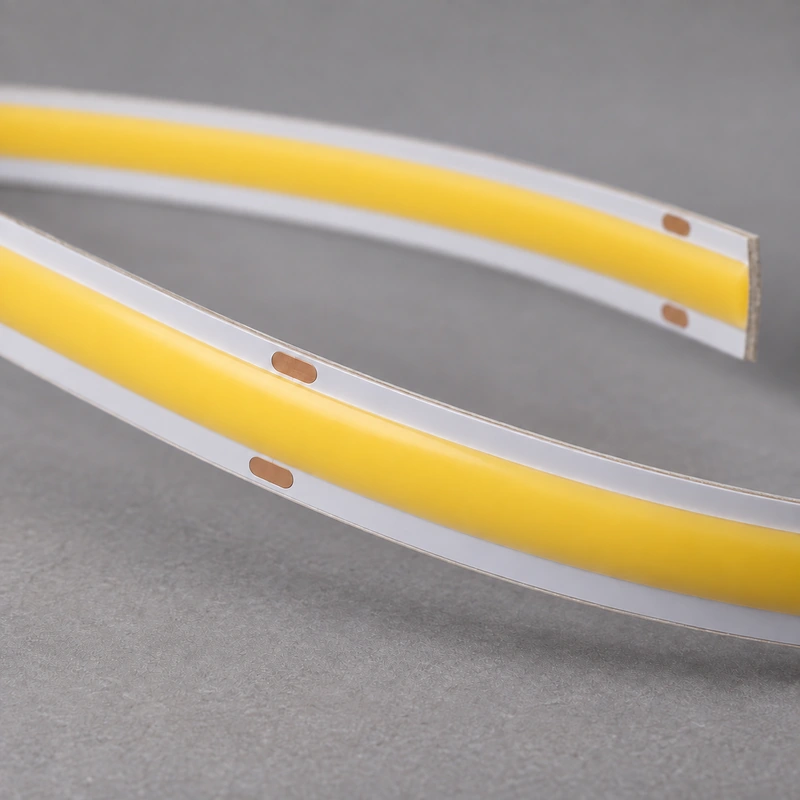
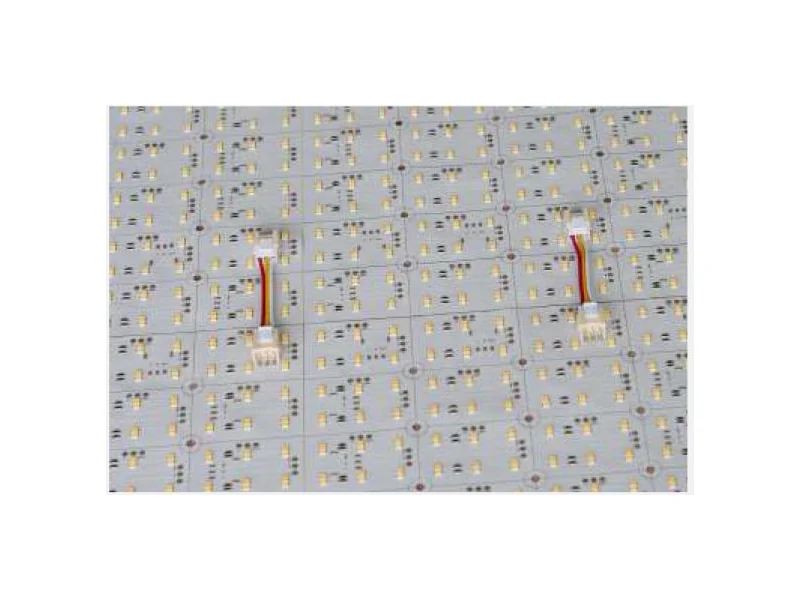
LED Strip Materials: Why They Matter
LED strips can look identical on a spec sheet, but the LED strip materials underneath decide how long a strip stays bright, even and safe. Four LED strip materials matter most: the PCB substrate, the copper foil, the silicone encapsulation and the adhesive layer. This guide explains what each one does, what to check before you buy, and how to care for strips that are already installed.
PCB Substrate: FR4 vs Aluminum
FR4 (fiberglass-reinforced epoxy) is the standard base for most strips. It is cost-effective, mechanically stable, and perfectly adequate for indoor low-voltage runs such as cove lighting, under-cabinet lighting and display shelves.
Aluminum PCB uses a metal core that conducts heat away from the LEDs. It matters when power density is high — roughly above 15 W/m — for example high-density COB strips, long continuous runs, or strips sealed inside an aluminum channel. The trade-off is higher cost and less flexibility.
Do not assume aluminum is always better in LED strip materials: match the substrate to the actual power density and ambient temperature. For most indoor decorative lighting, FR4 is the right and honest choice.
Copper Foil Thickness: 1 oz vs 2 oz
In LED strip materials, the copper foil is the current path. Standard thicknesses are 1 oz (about 35 µm) and 2 oz (about 70 µm). Thicker copper means lower resistance, less voltage drop and less heat — which shows up as more uniform brightness and longer LED life.
For runs longer than about 5 meters, high-power strips, or parallel feeds, 2 oz copper is noticeably more stable. Thin copper over a long run is the classic cause of the far end of the strip running dimmer and hotter, accelerating lumen decay.
Silicone Encapsulation & IP Protection
Among LED strip materials, encapsulation determines how well a strip resists dust and moisture (IP20 to IP68). Silicone is flexible, UV-stable and heat-tolerant — the right choice outdoors. PU coating is cheaper and suits light-duty indoor moisture protection. For outdoor projects, specify UV-stabilized silicone.
Higher IP is not always better: IP68 silicone is thicker and traps more heat, so it dissipates less than bare IP20. For indoor dry areas, IP20 is the better engineering choice. For a full comparison of ratings, see our LED strip IP ratings guide.
The Adhesive Layer
Most strips ship with 3M-class adhesive — the last of the four LED strip materials in this guide. Before mounting, clean the surface with isopropanol and let it dry completely. For high-power or outdoor installations, adhesive alone is rarely enough: use an aluminum profile with clips or end caps for mechanical fixing — and as a bonus, the profile helps dissipate heat. See our LED aluminum profiles for mounting options.
Day-to-Day Care & Cleaning
Care is simple but specific:
- Cleaning: switch off power first, then wipe with a dry or slightly damp cloth. No solvents, no pressure washing.
- Moisture: keep indoor dry-area strips away from damp; for outdoor strips, check that cut ends and connectors stay sealed (the IP rating only holds if the ends are sealed too).
- Heat: keep the driver and the strip ventilated; avoid running high-power strips at full load inside a sealed cavity.
- Bending: respect the minimum bend radius (typically 20–50 mm depending on the product); never fold at a sharp 90° angle.
- Pulling: connectors and solder points are the weakest spots — never pull the strip by its cable.
- Troubleshooting: if a strip dims or flickers, check the driver and connections first; it is often not the strip itself.
Buying Checklist
| What to check | What to look for | Why it matters |
|---|---|---|
| PCB substrate | FR4 or aluminum, matched to power density | Heat dissipation decides lifetime |
| Copper thickness | 1 oz for short indoor runs; 2 oz for long or high-power | Voltage drop, brightness uniformity, heat |
| Encapsulation / IP | IP20–IP68 matched to environment; UV-stable silicone outdoors | Moisture and dust resistance |
| Adhesive | 3M-class backing; surface prep before mounting | Prevents peeling and sagging |
| Certification | CE / RoHS; UL or ETL for the US market | Compliance and liability |
| Test data | Luminous flux, CCT and voltage-drop reports | Supplier reliability and consistency |
Copper foil thickness is measured in ounces per square foot; see the printed circuit board reference for how foil weight affects current capacity in LED strip materials.
Conclusion
LED strip materials decide the real cost and life of an LED strip. Run the checklist above before you buy, and follow the care routine after installation. If you need help matching specifications to your project, browse our LED strips or contact us for samples and technical review.