Retail Shelf LED Strip Lights: A Selection Guide for Commercial Displays

A customer decides in seconds. On a retail shelf, the light is part of that decision: it decides whether the product looks fresh, whether colors look true, and whether the shelf looks like a place worth stopping at.
This guide covers retail shelf LED strip lights: how to choose LED strips for retail shelves and commercial displays — the three things that matter most, how they change by product type, and where to put the strip.
The Three Things That Matter: CRI, Color Temperature, Brightness
CRI: color should look true
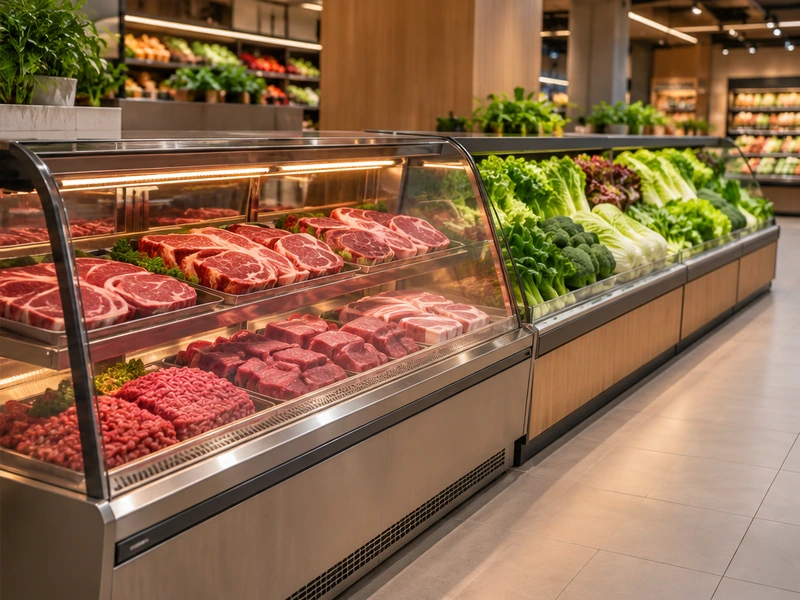
CRI — the color rendering index — measures how faithfully a light shows colors compared with daylight. For retail, CRI 90 or above is the usual recommendation. Below that, reds look dull, skin tones look flat, and fresh food looks tired. For jewelry, cosmetics and fresh food, high CRI is not a luxury; it is the point of the light. Check the CRI figure on the product datasheet — and for food displays, also ask about R9, the rendering of saturated red, which matters for meat and produce. The colour rendering index is the standard measure behind that figure, and a retail shelf LED strip lights specification usually starts with CRI, not brightness.
Color temperature: match the product
Color temperature is measured in Kelvin (K). Warm white (around 2700–3000K) suits bakeries, wood and leather. Neutral white (around 4000K) suits most general retail. Cool white (around 5000–6500K) suits electronics, jewelry and modern displays. The rule is simple: pick the temperature that makes the product look its best, then keep it consistent across the whole store. Mixed temperatures on one shelf look like a mistake.
Brightness and dimming: enough, not more
A shelf needs enough light to read labels and see colors clearly, but more brightness is not always better — glare on packaging and price tags hurts more than it helps. A dimmer lets the store tune the level through the day and across seasons. When sizing a run, check the lumens per metre on the datasheet and the total wattage, and size the driver with headroom — a common rule of thumb is about 20% above the strip’s total wattage.
Retail Shelf LED Strip Lights: Choosing by Product Type
The table below matches retail shelf LED strip lights to product types — check the datasheet for the exact figures behind each row.
| Product | What matters most | Suggested approach |
|---|---|---|
| Jewelry and watches | High CRI, cool white, sparkle | Cool white, CRI 90+, strip set back so the light grazes the pieces |
| Cosmetics | High CRI, neutral white, true skin tones | Neutral white around 4000K, CRI 90+, even light with no hot spots |
| Fresh food | High CRI and R9, cool to neutral white | Our fresh light strip is built for this — check the product page for the exact specifications |
| Clothing | Neutral white, even coverage | Neutral white, strip along the full shelf edge for even light |
| Electronics | Cool white, bright and clean | Cool white, CRI 90+, bright enough to read small print |
Where to Install the Strip
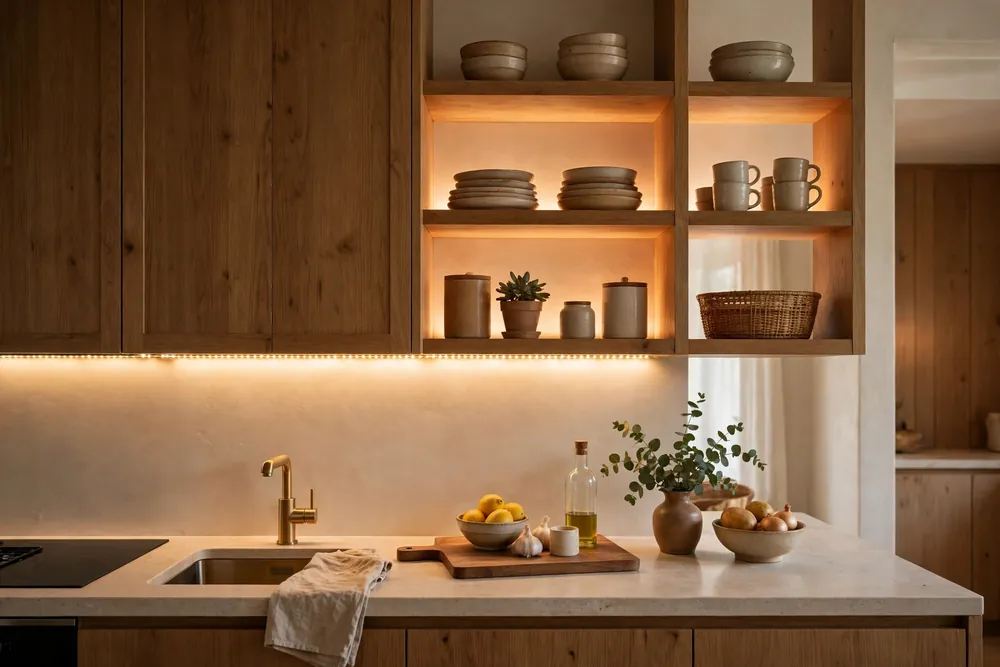
- Under the front edge of the shelf. The most common position. The strip sits back from the edge so shoppers see the light on the product, not the strip itself.
- Inside the cabinet. For glass cabinets and display cases, a strip along the top or the sides gives even light without glare on the glass.
- On the back panel. A strip behind the product creates depth and separates the product from the background. Useful for wall displays and feature shelves.
- Under the shelf, not on it. The strip lights the shelf below. Mounting it on top of the shelf wastes the light.
Whichever position you choose for retail shelf LED strip lights, hide the strip and its wiring from the shopper’s normal viewing angle, and use an aluminum profile with a diffuser where the strip itself might be visible. The profile also helps with heat, which protects the strip’s lifetime.
A retail shelf LED strip lights layout is only as good as its worst shelf: check the dimmest shelf in the store, not the best-lit one, before signing off the installation.
Frequently Asked Questions
What CRI do retail shelf lights need?
CRI 90 or above is the usual recommendation for retail shelf LED strip lights. For fresh food, jewelry and cosmetics, high CRI is what makes the product look worth its price. Check the CRI figure on the product datasheet, and ask about R9 for food displays.
What color temperature is best for retail shelves?
For retail shelf LED strip lights, it depends on the product: warm white (2700–3000K) for bakeries, wood and leather; neutral white (around 4000K) for most general retail; cool white (5000–6500K) for electronics, jewelry and modern displays. Keep one temperature consistent across the store.
How bright should shelf lighting be?
For retail shelf LED strip lights, bright enough to read labels and see colors clearly, without glare on packaging. A dimmer helps tune the level. Check the lumens per metre on the datasheet when comparing strips.
Where should the strip go on a shelf?
Usually under the front edge of the shelf above, set back so shoppers see light on the product rather than the strip itself. For glass cabinets, along the top or sides. For wall displays, on the back panel.
Talk to Us
If you supply retail chains or build display cabinets, tell us what you sell and we will help you choose the right retail shelf LED strip lights. Request a quote or see our distributor program.