
COB vs CSP vs SMD LED Strip Lights: A 2026 Three-Way Selection Guide for B2B Buyers

For years the choice was two-way: COB or SMD. In 2026 a third option joined the conversation — CSP, chip-scale package — and B2B selection guides went from two columns to three. This guide is a COB vs CSP vs SMD LED strip comparison — what CSP is, how it compares with COB and SMD, and which one fits your project.
If you want the deeper two-way discussion, start with our COB vs SMD guide. This article builds on it rather than repeating it. Read it as a COB vs CSP vs SMD LED strip buying guide, not a datasheet.
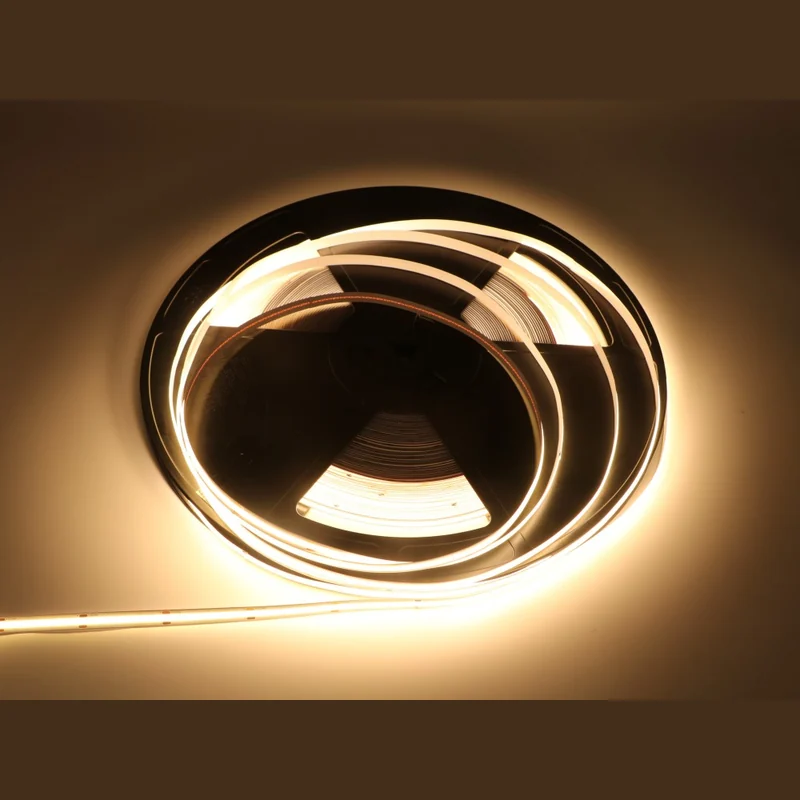
The Three Technologies in One Sentence Each
- COB (chip on board): many small chips mounted directly on the board under a continuous phosphor layer, so the strip looks like one unbroken line of light.
- CSP (chip scale package): the chip itself is the package — no substrate, no wire frame — so the light source is smaller than an SMD package and the strip can bend tighter.
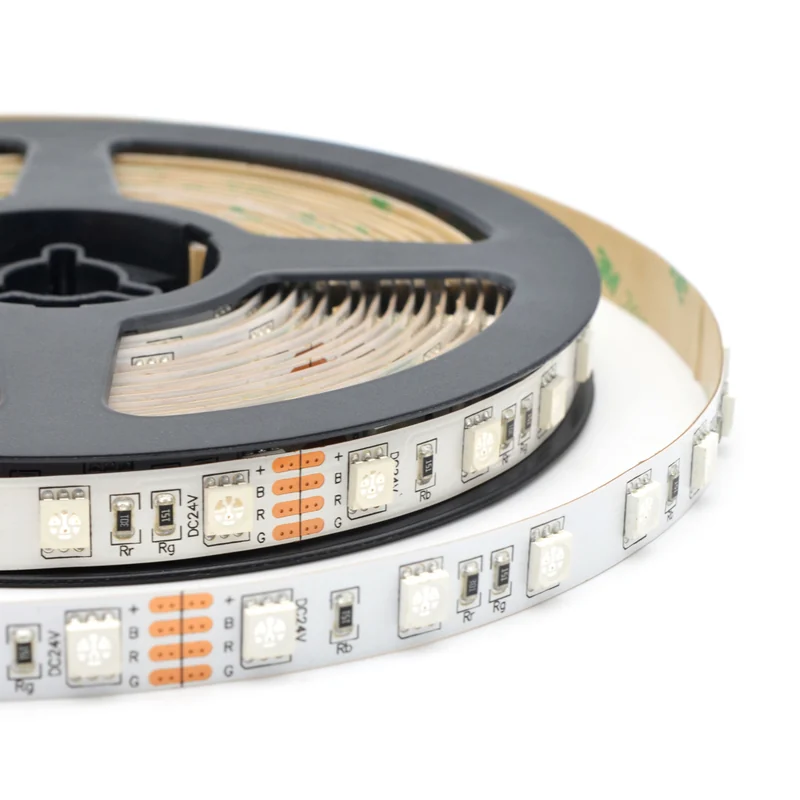
- SMD (surface mounted device): discrete LED packages soldered onto a flexible circuit — the most mature technology, the widest range of colors and options, and the usual choice for RGB.
COB vs CSP vs SMD LED Strip: Three-Way Comparison
The table below is the COB vs CSP vs SMD LED strip comparison in one view — check the datasheet of the exact candidates for the numbers behind each cell.
| Factor | COB | CSP | SMD |
|---|---|---|---|
| No-dot effect | Best of the three — a continuous-looking line at close range | Good — dense packaging, check the specific model | Depends on the profile and diffuser — can look smooth in a suitable luminaire |
| Beam angle | Wide, typically around 180° | Check the datasheet per model | Typically around 120° |
| Bend radius | Moderate — check the minimum bend radius per model | Generally the tightest of the three — confirm the minimum bend radius per model | Moderate — check the minimum bend radius per model |
| Efficacy (lm/W) | Model-specific — compare lumens per watt on the datasheet for the exact candidates | Model-specific — compare lumens per watt on the datasheet for the exact candidates | Model-specific — compare lumens per watt on the datasheet for the exact candidates |
| Lifetime | Model-specific — thermal path and build quality matter more than the package name | Model-specific — thermal path and build quality matter more than the package name | Model-specific — thermal path and build quality matter more than the package name |
| Cost | Mid-range | Often carries a premium as the newer option — confirm per model | Usually the lowest cost of the three — confirm per model |
| Best for | Visible lines, coves, anywhere the strip itself is seen | Tight curves and compact installations | RGB, budget-sensitive projects, the widest choice of colors |
No number in this table should be copied from one product onto another just because both are COB, CSP or SMD. Compare the datasheet of the exact candidates, under equivalent conditions.
Choose by Project
- Cove or any visible line → COB. Where the strip itself is seen at close range, the continuous line is the point. Check the color temperature and CRI on the datasheet.
- Tight bends or curves → CSP. Where the strip has to follow a tight radius, the smallest package helps. Confirm the minimum bend radius per model before ordering.
- RGB or budget → SMD. Where color changing matters, or where the budget decides, SMD has the widest range. For RGB work, check the controller protocol as well as the strip.
- Retail or food display → whichever gives the CRI you need. High CRI matters more than the package name. Check the CRI — and R9 for fresh food — on the datasheet.
That is the short version of the COB vs CSP vs SMD LED strip choice — the table above has the detail, and the datasheet has the numbers.
One last point on the COB vs CSP vs SMD LED strip choice: the package name never tells the whole story — two strips with the same package can differ in efficacy, CRI and lifetime, so the approved sample decides.
What CSP Changes — and What It Does Not
CSP changes the shape of the choice: a smaller light source, a tighter bend, a third column in the comparison. It does not change how you should buy. The same discipline applies as with COB and SMD: choose by the finished luminaire and the approved sample, not by the technology name; ask for a lit sample in the intended profile and diffuser; and keep claimed output tied to the tested configuration. Our COB vs SMD guide covers that buying discipline in detail — the specification, the commercial risks, and the questions to send your supplier. For LED modules, the Zhaga standard covers interface and interchangeability requirements worth checking before mixing modules from different suppliers.
Frequently Asked Questions
Is CSP brighter than COB?
In a COB vs CSP vs SMD LED strip comparison, no general comparison establishes that. Compare the photometrics — lumens per metre and efficacy — for the exact candidates under equivalent conditions.
Can CSP bend tighter than COB or SMD?
Generally yes — the smallest package allows the tightest bend — but the exact minimum bend radius is model-specific. Confirm it on the datasheet before ordering.
Is CSP more expensive?
Often, as the newer option in a COB vs CSP vs SMD LED strip comparison, but the gap depends on the model and the quantity. Confirm per model rather than assuming a fixed premium.
Which one should I choose for my project?
For a COB vs CSP vs SMD LED strip decision, choose by the finished luminaire: the visible line, the profile and diffuser, the bend radius, the color target and the approved sample — not by the package name alone. If you are unsure, send us the profile drawing and the application and we will compare the candidate configurations.
Talk to Us
Send us your profile drawing, application and color target and we will help you with the COB vs CSP vs SMD LED strip comparison for your project. Request a quote or see our distributor program.