
LED Strip Power Supply Sizing: The 80% Rule and a Worked Example
LED strip power supply sizing: how to work out the wattage you need, the 80% rule, and a worked example for a 48V 30m run.

The most common LED strip power supply mistake is buying a driver that exactly matches the strip. A 300W run on a 300W driver sounds right, and it will probably light up on day one. Then the driver runs hot, the far end goes dim, and a year later the driver fails — because a power supply should never run at 100% of its rating.
This guide shows how to size a LED strip power supply properly: the formula, the 80% rule, and a worked example for a 48V 30m run, plus two shorter examples at 12V and 24V. No guesswork, and every number in the examples comes from a published HST product page.
The Formula: Total Watts, Then Divide by 0.8
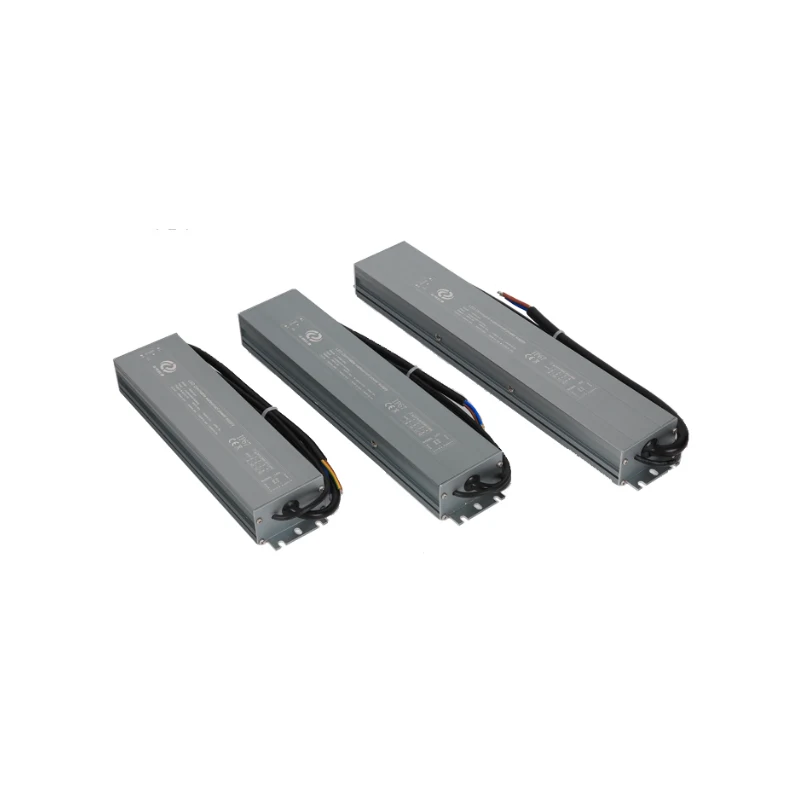
Sizing a LED strip power supply takes two steps. First, work out the total watts of the strip run. Second, divide by 0.8. That is the 80% rule: the strip load should be no more than 80% of the driver’s rated power.
Total watts = length in metres × watts per metre.
Driver watts ≥ total watts ÷ 0.8.
The divide-by-0.8 step is the part people skip. A driver rated at 100W is not a driver that should deliver 100W all day. Running a power supply at its limit leaves no margin for voltage variation, for a warm enclosure, or for the driver aging. The 80% rule is the same rule behind the load limits on our product pages: a supply should carry 80% of its rating, not 100%.
Note what the formula does not need: the number of LEDs per metre, the colour temperature, or the CRI. Those affect the light, not the wattage. The two numbers that matter for a LED strip power supply are the length of the run and the watts per metre — both are on the product datasheet for the exact model.
The Worked Example: 48V, 30 Metres, 300W
Take our 48V long run COB LED strip (model HST-FCOB480-10-DC48V): 48V, 10W per metre, 10mm board, 480 LEDs per metre, Ra90, around 850 lm/m, cut at the marked cut lines. Fed from one end, it runs up to 30 metres — the longest single-end run on our site, measured in a 4-hour test at 25°C with about 20% brightness difference from head to tail and about 10°C temperature rise.
Step one, total watts:
30 m × 10 W/m = 300 W.
Step two, apply the 80% rule:
300 W ÷ 0.8 = 375 W.
So the LED strip power supply for this run needs to be rated at least 375W, at 48V. A 300W LED strip power supply is too small, even though the strip itself is 300W. A 400W LED strip power supply is a comfortable fit — it carries 300W at 75% of its rating, inside the 80% limit, with margin to spare. A 375W driver is the minimum; anything above it works, as long as the voltage matches.
The current matters too, and it is where 48V earns its keep. At 10W per metre, the current per metre is:
| Voltage | Current per metre at 10W/m | Why it matters |
|---|---|---|
| 12V | 0.83 A | Highest current, most voltage drop, thickest wire |
| 24V | 0.42 A | Half the current of 12V |
| 48V | 0.21 A | A quarter of the current of 12V, least drop |
The current is simple arithmetic — watts divided by volts — and it is the reason the 48V strip runs 30 metres from one feed while a 12V strip of the same wattage cannot. Lower current means less voltage drop along the copper track, so the far end stays bright. For more on how far each voltage runs, see our 20m–30m 48V COB LED Strip Project Planning Guide.
Two More Worked Examples: 12V and 24V
The formula works the same at every voltage. Two shorter examples, both from published products.
Example 2: 5 metres of free-cut COB at 12V. Our free-cut COB LED strip runs at 13W per metre, 12V or 24V, with 1,105 lm/m on 12V and 845 lm/m on 24V, and Ra90. Five metres at 13W/m is 65W. Apply the 80% rule: 65 ÷ 0.8 = 81.25W. So the LED strip power supply needs to be rated at least 82W — a 100W driver is the practical choice, carrying the 65W load at 65% of its rating.
Example 3: 10 metres of 480 LEDs/m COB at 24V. Our 480 LEDs/m COB LED strip runs at 10W per metre, 12V or 24V, 8mm board, 1000 lm/m. Ten metres at 10W/m is 100W. Apply the 80% rule: 100 ÷ 0.8 = 125W. So the LED strip power supply needs to be rated at least 125W — a 150W driver is the practical choice.
| Run | Strip | Total watts | Minimum driver | Practical driver |
|---|---|---|---|---|
| 30 m at 48V | 48V long run COB, 10W/m | 300W | 375W | 400W |
| 5 m at 12V | Free-cut COB, 13W/m | 65W | 82W | 100W |
| 10 m at 24V | 480 LEDs/m COB, 10W/m | 100W | 125W | 150W |
If your run is a different length, the same two steps apply: length × watts per metre, then divide by 0.8. Round the result up to the next standard driver size.
Constant Voltage or Constant Current: Match the Driver to the Strip
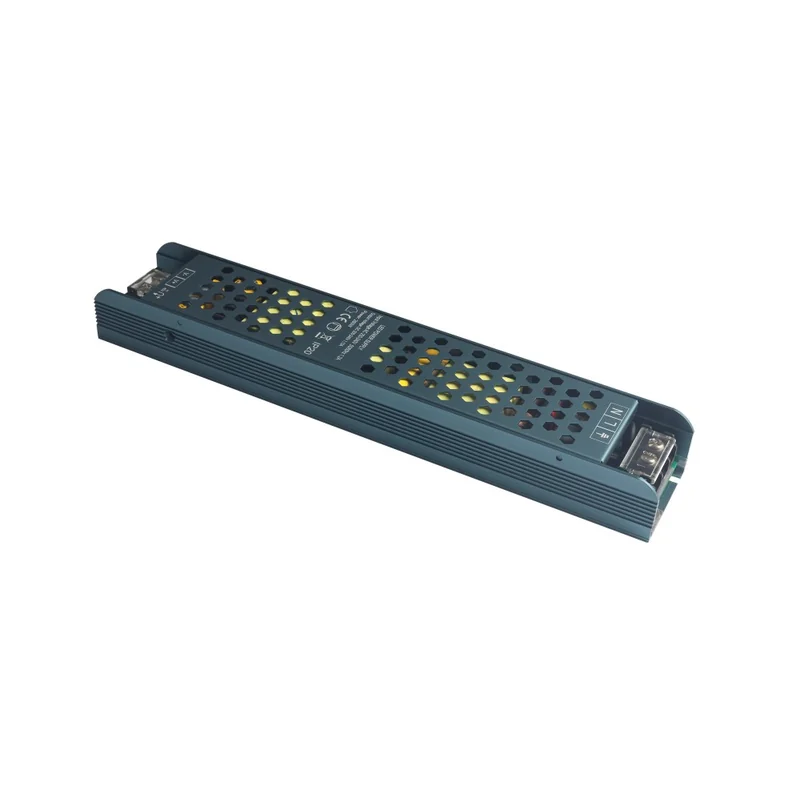
Wattage is only half the match. A LED strip power supply must also be the right type for the strip. Most 12V and 24V strips run on a constant-voltage driver: the driver holds the voltage steady, and the strip draws the current it needs. Most LED drivers are switched-mode power supplies, which convert mains AC to the low-voltage DC a strip needs. A constant-current strip is different — it needs a driver matched to its current, not just its wattage.
Check the strip’s datasheet for which type it is, and match the driver to it. A constant-voltage driver on a constant-current strip, or the reverse, will not work properly even if the wattage is right. If the datasheet does not state the driver type, ask before ordering — it is a one-line question that avoids a return.
The voltage must match exactly. A 24V strip needs a 24V driver; a 48V strip needs a 48V driver. There is no “close enough” with voltage. The wattage is where the margin lives; the voltage is where it does not.
What Happens When the Driver Is Too Small
An undersized LED strip power supply rarely fails loudly. It fails gradually, and the symptoms look like strip problems. The far end of the run goes dim first, because the driver cannot hold the voltage up under load. Flicker appears when the strip is dimmed, because the driver is already working at its limit before the dimmer asks it to do anything. The driver itself runs hot, and heat shortens its life — a driver that should last years can fail in months.
If a strip that was bright on day one has gone dim at the far end, or flickers only when dimmed, check the driver wattage before blaming the strip. Work out the total watts of the run, divide by 0.8, and compare the result with the driver’s rating. If the LED strip power supply is below the minimum, the fix is a bigger driver, not a new strip.
One Driver for Several Strips?
One LED strip power supply can feed several strips, as long as three conditions hold. First, every strip must run on the same voltage — do not mix 12V and 24V strips on one driver. Second, add up the watts of all the strips and apply the 80% rule to the total, not to each strip separately. Third, feed each strip properly: do not daisy-chain strips past the maximum run length for the model. A single driver feeding three 5-metre strips is fine if the total is within the driver’s rating and each strip is fed from the driver, not chained end to end beyond its limit.
Put the LED strip power supply somewhere accessible and ventilated, not sealed inside a ceiling with no airflow. A driver that cannot shed heat will run hot whatever its rating, and heat is what kills drivers. For the full range of power supplies, see our LED power supplies hub, including the 48V LED power supply for long runs.
Frequently Asked Questions
What size power supply do I need for LED strip lights?
Work out the total watts first: length in metres × watts per metre. Then divide by 0.8 — the LED strip power supply must be rated at least that much, so the strip load stays within 80% of the driver’s rating. For example, a 30m run at 10W/m is 300W, so the driver needs to be rated at least 375W.
Can I use a bigger power supply than the strip needs?
Yes. A LED strip power supply rated above the minimum is fine — the strip only draws the watts it needs, and the extra capacity is margin. What must match exactly is the voltage: a 24V strip needs a 24V driver, whatever the wattage.
What happens if the power supply is too small for the LED strip?
The far end goes dim, flicker appears when dimming, and the driver runs hot and fails early. If a strip that was bright on day one has gone dim at the far end, check the driver wattage first: total watts ÷ 0.8 is the minimum rating.
Do I need a bigger power supply if I dim the LED strip?
No. Dimming reduces the load, so a LED strip power supply sized for full brightness is already big enough for dimmed operation. Size the driver for the strip at full brightness, and dimming takes care of itself.
Talk to Us
Sizing a LED strip power supply is two multiplications, but the numbers have to come from the right datasheet. If you tell us the strip model and the length of your run, we will work out the driver size with you — and if your project needs a different voltage, a constant-current driver, or a driver in a specific format, tell us the requirement and we will confirm what fits before you order. Browse our LED power supplies range or contact us with your run length and strip model.